How to Turn One Event into a Month of Marketing Content
A conference, launch, performance or company event can generate far more than one recap post. With a simple plan, the ideas, people and moments around it can support useful content before, during and after the event.
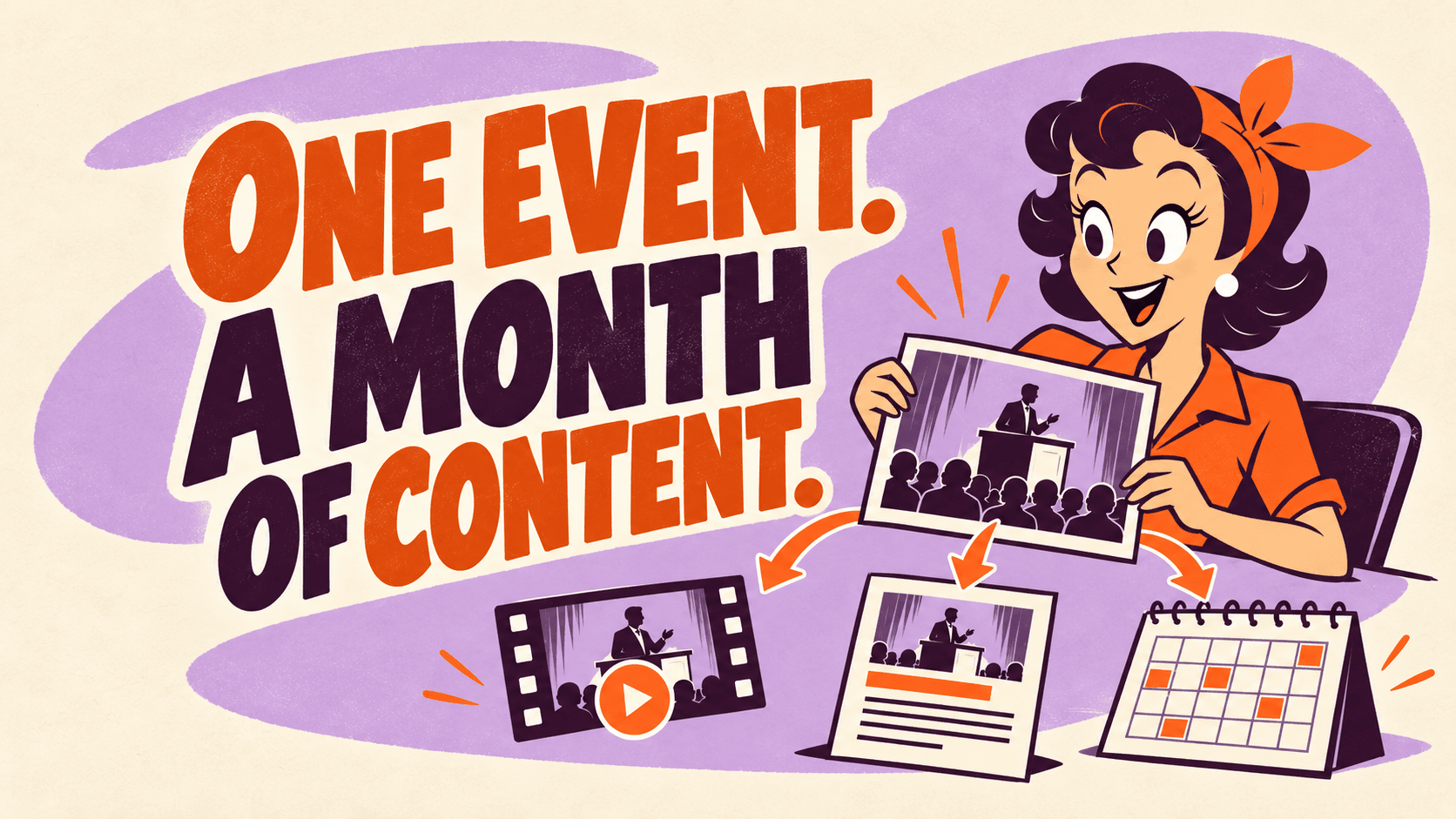
A business spends weeks preparing for an event. Then the event ends, a photo album goes online with a caption thanking everyone for attending, and the marketing opportunity is over. The images may be good, but the audience sees only that the event happened.
An event contains more material than a single recap can hold. There is the reason it was organised, the work behind it, the ideas shared, the people involved and the questions it raised. Capturing those parts with a plan can give your team useful content for several weeks.
Decide what the event should communicate
Before making a content list, identify the event’s purpose. Are you introducing a service, building a professional community, showing expertise, celebrating a project or encouraging people to attend the next edition? The answer determines which moments are worth capturing.
A conference might be rich in questions and insights. A restaurant opening might be about the team, the space and the first guest experience. A live performance may need photographs and short video that communicate its energy. The content should reflect what mattered at that particular event.
Before the event: give people a reason to care
An announcement is useful, but it rarely explains the whole story. Introduce the problem or idea behind the event. Let a speaker explain what they will discuss. Show a glimpse of preparation or answer a question a potential attendee might have. These pieces can promote attendance while giving people a reason to follow along even if they cannot be there.
During the event: capture material with a purpose
Ask your photographer or videographer for more than room shots and posed group photographs. Capture the setting, meaningful interactions, speakers, audience reactions, details of the work and short answers from participants where appropriate. Record key ideas accurately so the team can turn them into posts later.
Plan permissions and access in advance, especially if attendees, performers or client work will appear in photographs and video. A clear brief also helps the person filming know which moments cannot be missed and which formats your channels need.
After the event: publish ideas, not just attendance
The first post can share a timely recap. After that, separate the material by what each piece gives the audience. One post might explain a useful point raised by a speaker. Another could answer a question that came up repeatedly. A short video might show a moment that still makes sense without having attended.
- A short recap with the strongest photographs and a clear takeaway.
- A post exploring one useful idea or question from the event.
- A speaker or team interview edited into a short video.
- A behind-the-scenes story about the preparation.
- A website article that develops the topic in greater detail.
- A follow-up post explaining what happens next.
The aim is not to stretch one evening into dozens of near-identical posts. Each piece should offer something distinct. If a photograph, quote or clip adds no context or value, it does not need to be published.
Give the content a simple schedule
A practical sequence could begin with preparation and introductions in the week before the event. Publish a recap shortly afterwards, followed by one or two ideas, a video and a longer article over the following weeks. Leave space to respond to the conversations the event actually creates rather than committing every post in advance.
Plan the output before you book the coverage
If you want a month of useful content, decide on the deliverables before the event begins. Tell the photographer or videographer which people to capture, which moments matter and whether you need horizontal video, vertical clips, portraits or images with room for text. Assign someone to record names, topics and context so the material remains usable when the day is over.
An event is a concentrated opportunity to show what your business does and what it cares about. With a little planning, its value can continue well beyond the thank-you post.
Make it seen.Make it matter.
Bring us your marketing, website or social profiles. We'll bring fresh eyes, honest ideas and absolutely no vague agency waffle.
Book a free reviewWe'll poke around
- Your marketing, minus the guesswork
- The profiles people actually see
- Quick wins worth acting on
No commitment. Just useful perspective and a clearer next move.