Is Your Brand Consistent Across Your Website and Social Media?
A customer may discover your business on LinkedIn, visit your website and then look at your Instagram page. Do those places feel like the same business? Brand consistency helps people recognise you and understand what to expect.
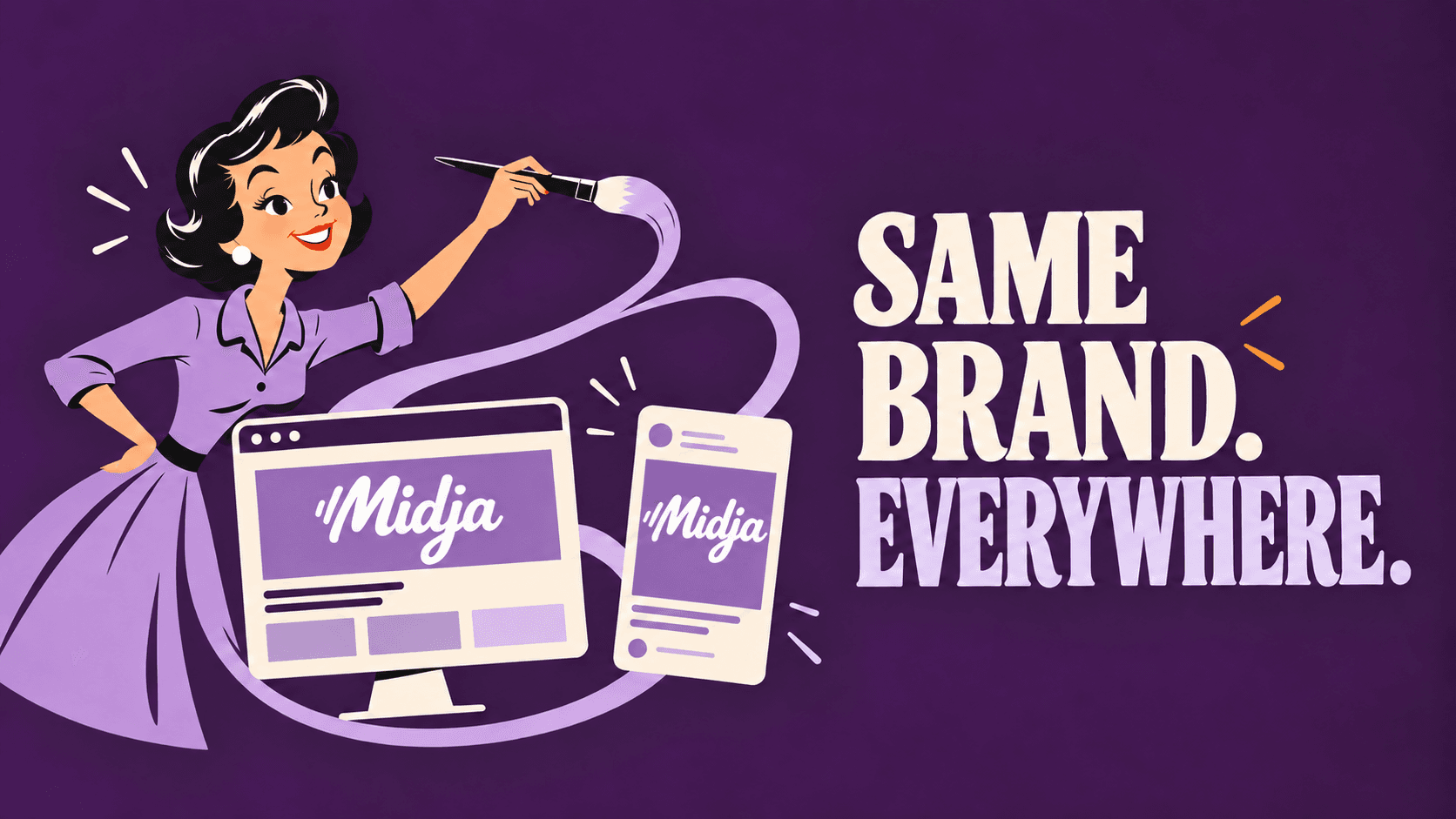
Imagine finding a business through a thoughtful LinkedIn post. You click through to its website, but the language suddenly becomes formal and generic. The colours are different, the photographs show a different kind of customer, and the service that interested you is difficult to find. Nothing is necessarily broken. Yet, somewhere between the post and the website, the business has become harder to recognise.
Customers rarely experience a brand in one place. They move between search results, websites, social media, emails and sometimes a physical space. Each encounter helps them decide whether the business is relevant and whether they can trust what it says.
Consistency does not mean copying the same design everywhere
A website, an Instagram post and a LinkedIn article serve different purposes. They should not have identical layouts or use the same caption. Consistency means that the business remains recognisable as the format changes.
That recognition might come from a familiar tone of voice, a considered colour palette, consistent typefaces, a clear approach to photography and a message that does not change from one channel to the next. A playful social post can sit alongside a detailed service page if both sound like the same organisation speaking to the same audience.
Where do businesses usually lose consistency?
The gaps often appear gradually. A website is built at one point in the business’s life. Social media templates are made later. A new team member starts writing captions. Photography from several different projects is mixed with stock images. Each decision may be reasonable on its own, but the overall picture becomes less clear.
- The website describes the business as premium, while social posts focus almost entirely on discounts.
- Social media promotes a service that is missing or difficult to find on the website.
- The website uses polished photographs of real work, while social media relies on unrelated stock images.
- The same service has different names or explanations across channels.
- Posts invite people to make an enquiry, but the linked page gives them no obvious next step.
These are more than visual details. They affect whether someone can understand the offer and continue their journey without having to piece the story together for themselves.
Check the journey a customer would actually take
Open a recent social media post as though you have never heard of your business. What does it promise? Where would you click next? Once you reach the website, can you find the service, see evidence of the work and understand how to enquire? Repeat the exercise from a Google search result or your social media profile.
Look beyond the logo. Compare the words used to explain the business, the kinds of images shown, the audience being addressed and the actions requested. If a person moves from one channel to another, does each step confirm what they have already learned?
Build a system your team can use
A practical brand system does not have to be a lengthy document. It should give the people creating your website and marketing materials enough direction to make good decisions: which colours and typefaces to use, what photographs suit the business, how services should be described and what the brand should sound like.
It also helps to keep a single, current description of each service. When the offer changes, update the website, profiles and recurring content together. Otherwise, old explanations can continue circulating long after the business has moved on.
Start with one useful improvement
You do not need to redesign every channel at once. Start with the point where customers are most likely to notice a gap. That might be a social profile linking to an outdated homepage, a service page that no longer matches your posts, or photographs that do not reflect the work you currently do.
A consistent brand makes it easier for customers to recognise you and follow the path from first impression to enquiry. The aim is simple: wherever someone encounters your business, they should have a clear sense that they are in the right place.
Make it seen.Make it matter.
Bring us your marketing, website or social profiles. We'll bring fresh eyes, honest ideas and absolutely no vague agency waffle.
Book a free reviewWe'll poke around
- Your marketing, minus the guesswork
- The profiles people actually see
- Quick wins worth acting on
No commitment. Just useful perspective and a clearer next move.